Understanding your ideal customers means knowing which moment makes them start looking for a provider, what makes them hesitate before getting in touch and which words they use to describe their problem. You don’t need market research for that. The material is already sitting in your inbox and your call notes. You just have to go through it systematically, with a simple table and a few hours of time.
Key points at a glance
- Age, industry and company size describe your customers. For your website you also need the reason they are looking right now.
- Buying triggers are events and moments of frustration, objections are worries and the pull of habit. You find both in enquiries, first calls, questions about quotes, lost deals and reviews.
- Write down what customers say word for word, in the language they actually use.
- Recurring triggers become headlines. You answer objections where they come up, for example next to the price or right by the form.
- For a first pass, your last ten to 15 enquiries and calls and a free afternoon are enough.
What are buying triggers and objections?
A buying trigger is the specific event that turns a problem someone has put up with for a long time into an active search. For example: the long-serving office manager hands in their notice, and suddenly the invoices pile up. An objection is anything that makes the person hesitate despite being interested, such as worries about effort, cost or making the wrong choice.
One of the most common buying triggers we see is negative feedback about a company’s own website. A customer says the site looks dated or even unprofessional. Or: “I couldn’t find what I was looking for.” Often, though, the hint comes from friends and colleagues rather than from customers. The actual prospects have long since chosen another provider by then.
Triggers like these don’t appear in any target group description based on age and industry. Two owners of trade businesses of a similar size can be looking for completely different reasons. One needs new staff because his best journeyman is retiring. The other is still typing up quotes in the evening and has had enough. On paper, both are the same target group.
A helpful model for this comes from the Jobs to be Done theory, which Clayton Christensen and colleagues described, among other places, in the Harvard Business Review. Its core idea: people buy a product to make progress in a specific situation. When they actually switch is explained by Bob Moesta, who teaches the theory in practice together with Chris Spiek. In their podcast they describe every switch as a tug of war, pulled by four forces. The push of the current situation and the pull of the new solution move people forward. Anxiety about the new and the habit of the present hold them back.
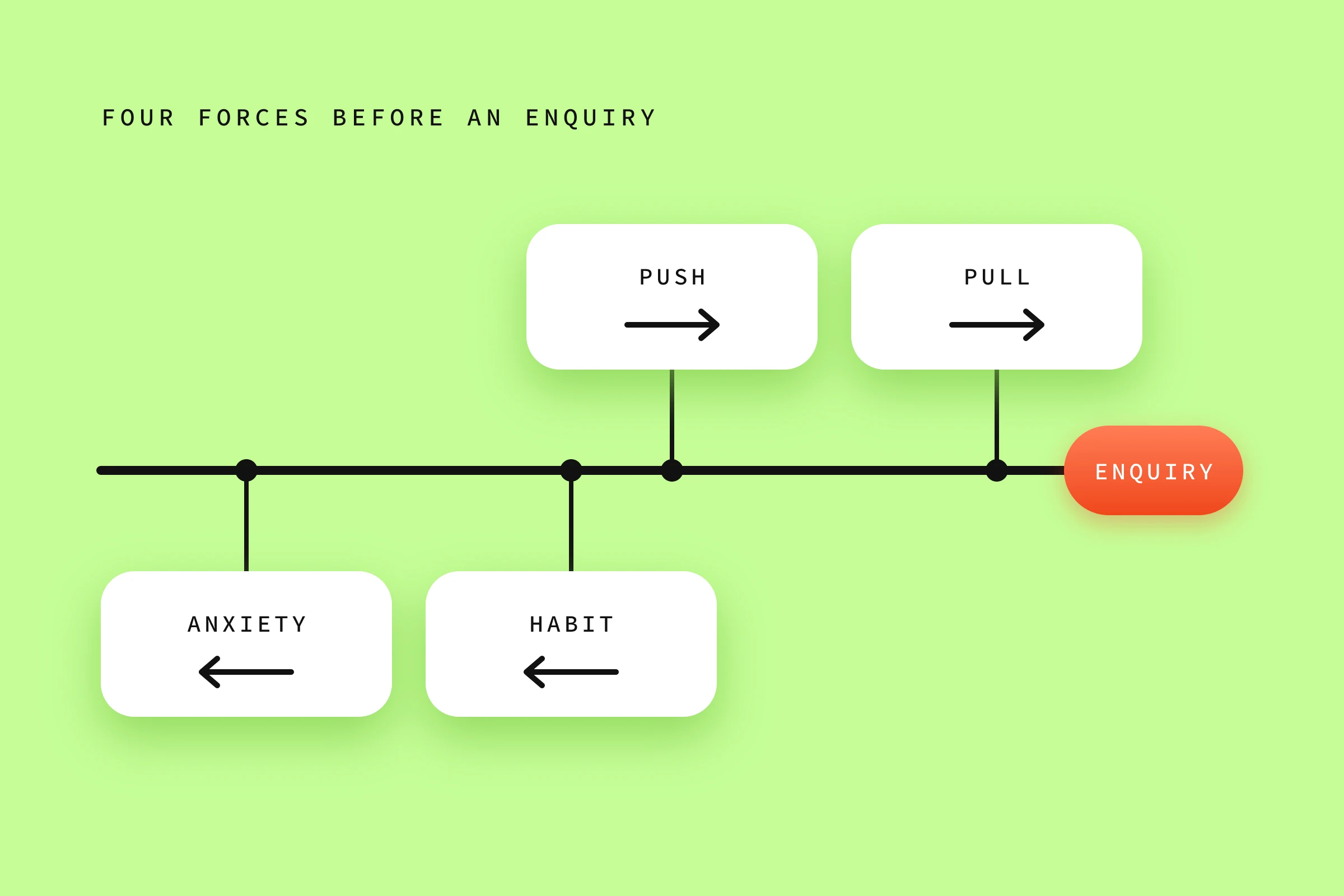
Buying triggers show you where the push comes from. Objections show you what holds people back. Why you should know this before the design starts is what we cover in Website not bringing enquiries?.
Where do you find buying triggers and objections without market research?
You already have the best sources: first calls, email enquiries, questions about quotes, lost deals and reviews. Each one shows a different part of the picture. Enquiries and first calls reveal triggers, questions about quotes and rejections reveal objections. Reviews show which result mattered most to customers in the end.
| Source | What you find there | What to look out for |
|---|---|---|
| First calls | Triggers, background, previous attempts | The first sentence someone uses to describe their request |
| Email and form enquiries | Triggers in customer language, urgency | Subject lines and deadlines such as “by the end of the quarter” |
| Questions about quotes | Objections about price, effort and process | What someone wants to know before signing |
| Lost deals | The objections that won | The reason for the rejection, including what’s between the lines |
| Reviews | Desired outcome, relief | What customers praise that you have never advertised |
In your next first call, write down the first sentence the other person says, as close to word for word as you can. It often contains the trigger, before the two of you drift into technical details. If it’s missing, ask directly: “Why now?” If most of your enquiries come in by phone, note down that first sentence after every call.
“Thanks for letting me know. May I ask what tipped the balance? A single line is fine.” That’s all it takes to follow up on a rejection. Hardly anyone asks after losing a deal, because the rejection stings. Yet the answer contains the objection that was stronger than your offer. Not everyone replies.
With reviews, the middle ratings are often the most revealing, because praise and disappointment sit side by side. If you don’t have many of your own yet, read those of comparable providers on Google or industry portals. Your own reviews show you which result customers highlight. Sometimes that is different from what you advertise: you sell expertise, they praise how easy you are to reach.
How do you analyse customer statements step by step?
Take your last ten to 15 enquiries and calls and collect every customer statement from them in one document. Copy them word for word and assign each one a type: trigger, previous solution, objection or desired outcome. Then you cluster what repeats and bring those patterns into your website concept. Individual voices are noted, nothing more.
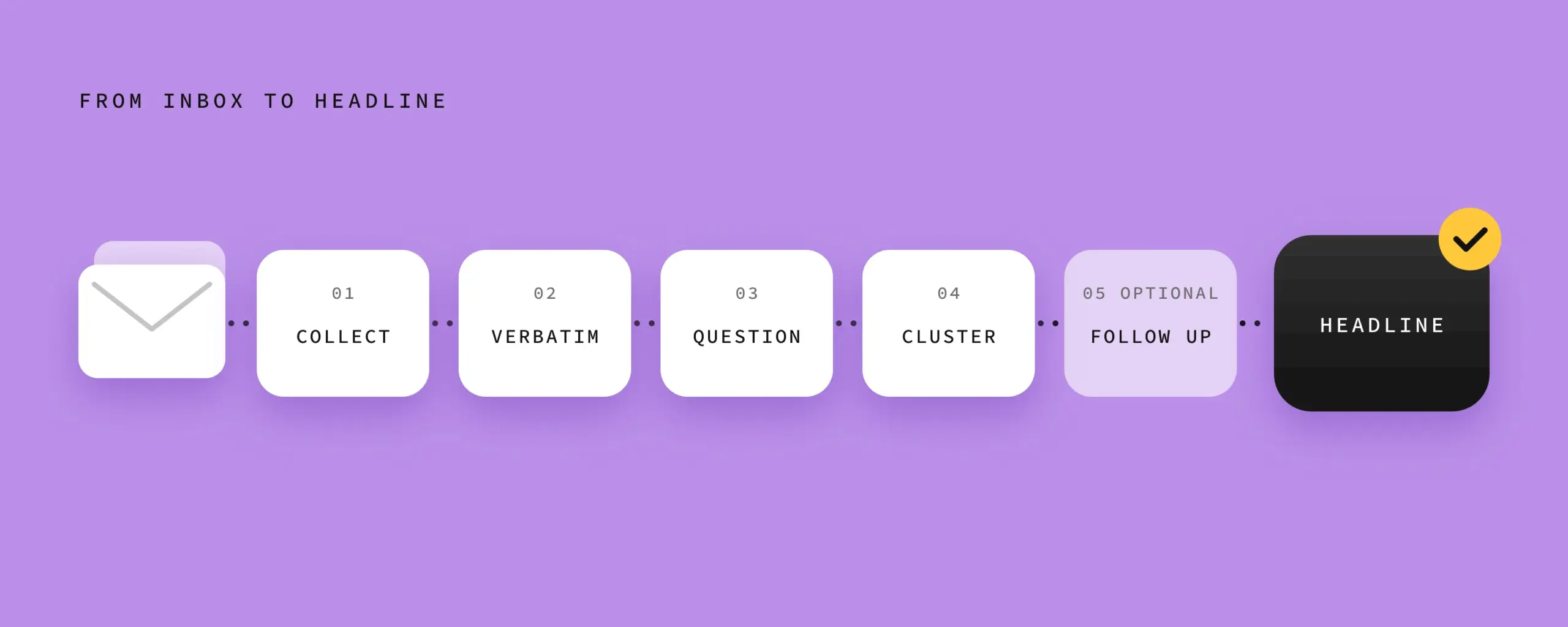
Step 1: Set up a collection document
A simple table is enough, with four columns: source, verbatim quote, type, date. Leave out names and companies. Go through your latest enquiries and calls in the order they came in.
Step 2: Write it down word for word
If someone writes “I spend every Sunday doing the invoices”, that exact sentence goes into the table. While typing it up, you’ll notice how strong the urge is to translate it into your own jargon, something like “optimisation potential in accounting”. The original words are the ones your ideal customers will later recognise on your site.
Step 3: Ask four questions of every statement
Go through each statement with these four questions:
- Trigger: What happened that made this person look now and not a year ago?
- Previous solution: What did they do or try before, and why is that no longer enough?
- Objection: What made them hesitate or ask questions?
- Desired outcome: How do they know it was worth it?
Not every statement answers all four questions. Only note what is actually there.
Step 4: Cluster the patterns
Sort the table by type and group similar statements together. Count how often each group comes up. Ideally you end up with one to three triggers and a handful of objections that appear more than once.
Step 5: Fill the gaps with conversations
If one type is missing, for instance because you have barely recorded any rejections, call three to five people: customers and, if possible, prospects who decided against you. 20 minutes is enough. Ask open questions:
- What was going on when you started looking for a solution?
- What did you try before?
- What almost stopped you from working with us?
- How did you notice it was worth it?
Ask about situations, not opinions. “What was going on?” brings out stories. Ask “What matters to you?” and you’ll mostly hear “quality and reliability”.
With prospects who turned you down, a call is trickier. Often you won’t even reach them, and the conversation is awkward for both sides. The answers are still worth it. In these cases you can also follow up by email.
Say that you want to understand what tipped the balance and that no new offer will follow. Ask for ten minutes or offer to answer the questions in writing. Instead of question 3, use this one: “What spoke against us in the end?” Asking costs nothing except a little courage.
How do you turn customer language into headlines and page copy?
Every recurring pattern gets a fixed place on your website. The most common trigger becomes the main headline or subheadline on your homepage. You answer recurring objections exactly where they come up. The desired outcome belongs in benefit statements and testimonials. Keep your customers’ wording as close to the original as possible.
Say you’re an IT service provider for small offices and have analysed your enquiries. The translation could look like this:
| Pattern | Customer statement | Becomes | Place on the website |
|---|---|---|---|
| Trigger | “Since our apprentice left, nobody looks after the computers any more.” | “No apprentice left to look after the computers? We’ll take that on.” | Homepage headline |
| Objection | “We’re still under contract with our old provider.” | “Switching mid-contract? We’ll plan it with you, step by step.” | Right above the contact form |
| Objection | “What does it cost per month?” | A price range with an example calculation | Service page, next to the offer |
| Desired outcome | “Finally I don’t have to fix the printer myself any more.” | “Never fix the printer yourself again.” | Benefits block and testimonials |
For comparison, put a typical industry headline next to it: “Your reliable partner for modern IT”. No office owner recognises their Monday morning in that.
An objection about price belongs primarily on the service page, not in an FAQ at the bottom of the page. The worry about effort is best placed right next to the “Send enquiry” button. If a question stays unanswered, some visitors leave before they ask it. How to build answers like these into a page is shown in our article on landing page structure.
Typos and swear words come out when you adopt the wording. Images like the Sunday spent on invoices stay in. You can then check whether a new headline works with the ten-second test from our article Website not bringing enquiries?: show your homepage to a stranger and ask what you offer and for whom.
A common objection we hear: “How will we know the new website was worth it?” The answer depends on what the site is for, and usually that means more enquiries. That’s why we set up suitable tracking in our projects from the start and look at the numbers together after 90 days.
What goes wrong when quotes turn into copy?
The analysis can still fall apart once quotes are turned into page copy and several people have a say. Customer wording drifts back into jargon, or an invented persona profile pushes the collected statements aside. Either way, the value of your analysis is lost before a single new headline goes live.
In the review meeting, someone reads out the list of quotes. A colleague finds “still typing up quotes every evening” too casual, and your business partner suggests “increasing sales efficiency”. So bring the quote table to the meeting and decide on wording against the original.
The second classic is the profile: “Monika, 47, enjoys cycling and drinks oat milk.” It feels like a result. What makes Monika start looking or what makes her hesitate isn’t in it. If you build your ideal customer profile from the statements you collected, it answers both questions on its own.
Frequently asked questions about ideal customers and buying triggers
How many customer statements do I need to start with?
For a first pass, your last ten to 15 enquiries and calls are a good start. If triggers and objections repeat, you have enough. If every new source brings something completely different, keep collecting or narrow down your target group. There is no fixed minimum; it all comes down to the repetitions.
What if I hardly have any customers yet?
Then you use other people’s material, for example reviews of comparable providers and questions in specialist forums or industry groups. People describe their problems there without a filter. Add conversations with people from your target group who don’t buy from you yet. As soon as the first real enquiries come in, you check your assumptions against them.
Can I use customer statements word for word on my website?
As anonymous wording in your copy, yes. A sentence like “I spend every Sunday doing the invoices” becomes a headline without anyone being identifiable. It’s different if you show a quote with a name or company as a testimonial. In that case, get the person’s approval first, ideally in writing by email.
How often should I review my ideal customer profile?
At the latest before every major revision of your website, and whenever your enquiries change noticeably, for example because enquiries suddenly come from other industries. The easiest way is a routine: add new enquiries to your collection document as they come in and look at the patterns once a quarter.
Conclusion
Your ideal customers have long told you why they buy and what makes them hesitate. It’s all in your enquiries and call notes. Collect these statements word for word and cluster them, and you get headlines visitors recognise themselves in, plus answers to objections before anyone has to raise them. Set up a table with four columns today, add the statements from your last ten to 15 enquiries and mark what comes up more than once. Your next step after that: submit your website for a free website check. In a video, we’ll show you, among other things, whether a stranger immediately understands from your homepage what you solve and for whom.
Sources
- Christensen, C. M., Hall, T., Dillon, K. & Duncan, D. S. (2016): Know Your Customers’ “Jobs to Be Done”. Harvard Business Review, September 2016.
- Spiek, C. & Moesta, B.: Forces Friday: Pull and Anxiety. Jobs-to-be-Done Radio, jobstobedone.org (undated).